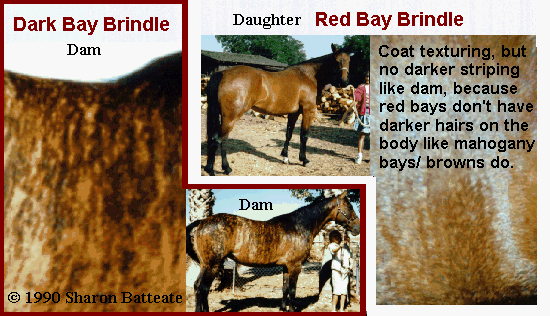
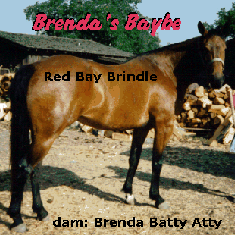
Featured this month is Brenda's Baybe, a daughter of the brindle mare Brenda Batty Atty by an unknown stallion. Because she is a red bay (clear red color with little smuttiness/ sootiness/ countershading), darker hair is prevented from appearing on the body, so you cannot see any darker striping on her coat, even though she has coat texturing like her dam. Her dam "Brenda" is a dark bay or mahogany bay base color, which allows darker hairs to appear on the body, so the brindle striping can be seen.
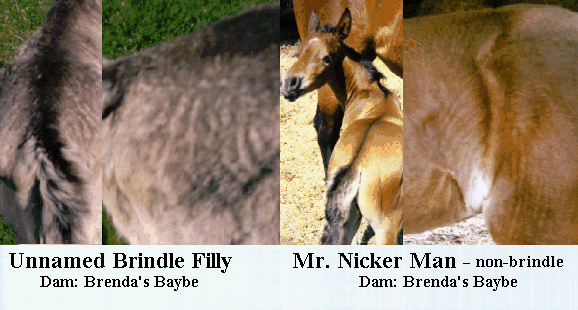
Brenda's Baybe had three foals before she had to be put down due to an accident from trailer loading. Pictures were not taken of her first foal. Her second foal was a 2 week premature filly pictured below on the left. A definite brindle, she had coat texturing and two colors (buff and gray) apparent in her coat at birth. Had she lived, the gray areas would have become brown or black, and the buff areas would probably have been a lighter shade of brown.
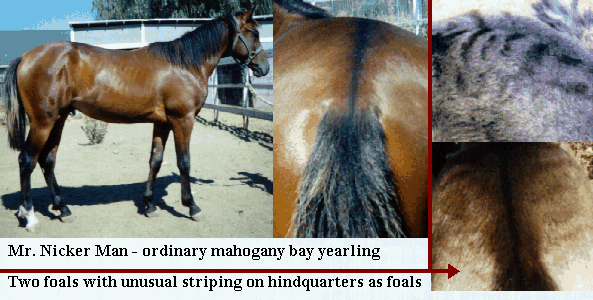
Thus, I found that coat texturing in a foal is no guarantee that they are carriers of the brindle pattern. In fact, I know of numerous other foals (from non-brindle breeding) that have also exhibited coat texturing as foals. Both the foals shown below on the right had odd texturing and striping patterns on the hindquarters which they lost as they matured. In general, the young of many species often exhibit primitive patterns which they loose as they mature.
Volume 1, number 10. Written information was last updated November 3, 1997. We will update the written information approximately once a month - however, because Brindle Horses are so rare, we may not be able to update the photos in the slideshow that often. When returning to this site, remember to select the refresh or reload icon from your internet explorer tool bar at the top of the screen, so your screen will reload the latest information. The address of this web site is https://www.brindlehorses.com
You may e-mail me at jsbatteate@aol.com
Click here to e-mail me!
Brindle has occurred in such diverse breeds as Arabians, Thoroughbreds, Mustangs, Quarter Horses, Bavarian Warmbloods, Russian Horses, Spanish Horses, and supposedly also in the Netherlands. Sometimes the pattern seems to be composed of dark hair (black or brown), sometimes of white hair (roan). Since so little information is available on the Brindle pattern in horses, we are not sure if they are from the same gene or not. There could be several genes involved, producing similar patterns (much as pinto/paint spotting can result from several different genes). Many people confuse Dun Factor markings (stripe down the back, barring on the legs) with brindle. Indeed, there have been many examples of horses that were probably carrying both genes. However, the Russian cab horse, and the Brindle mare on the far right in the photo you can click the highlighted type to see, do not have any Dun Factor markings whatsoever. Click this highlighted type to compare Dun Factor and Brindle. Brindle horses also have texturing in their coat, similar to that seen in some Appaloosa horses. The pattern seems to be inheritable, especially in terms of coat texturing, but the extent of striping is highly variable, and even varies with individual horses seasonally / yearly. However, before we start drawing too many conclusions about the pattern, we need to locate more examples for a study.